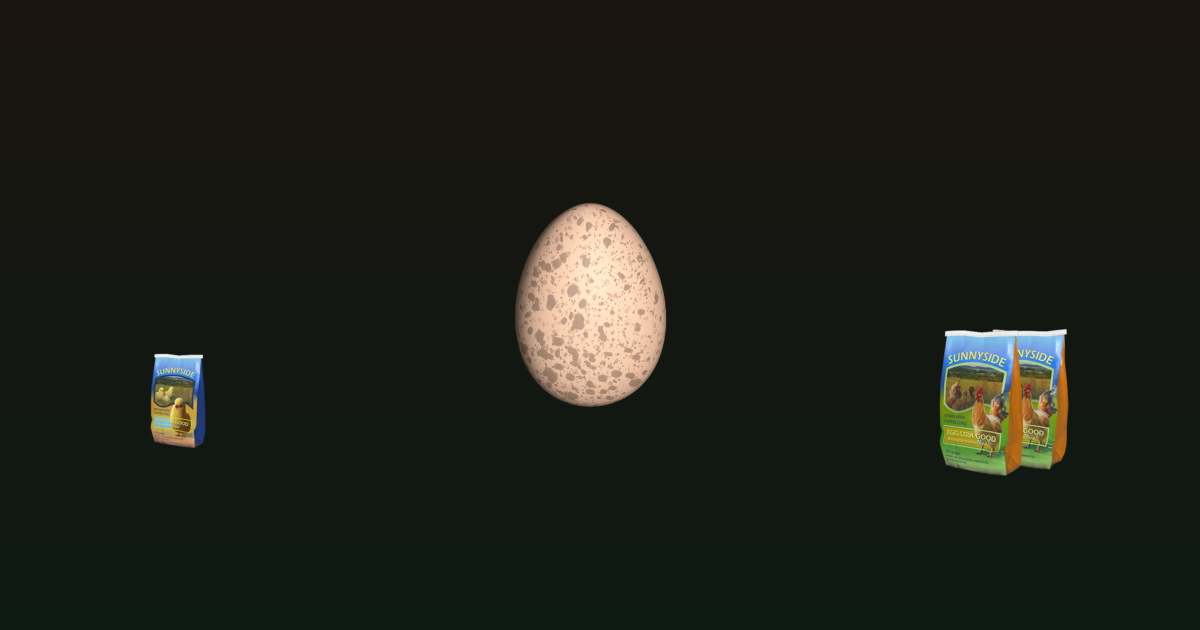
CS2 Pet Chicken Seeds & Egg Patterns Guide: How Seed Numbers Shape Shell Colors, Breeds and Body Size
November 15, 2026
Short answer: Every CS2 pet carries a hidden 32-bit pet seed (attribute 313, ranging from 0 to 4,294,967,295) that feeds Source 2's CUniformRandomStream. On a Chicken Egg, that seed drives 7 shader slots controlling shell hue (-12° to +165°), saturation, brightness, speckle blend, and speckle scale/UV offset. On an adult Catalana, Silkie, or Polish hen, the same stream rolls 9 body-shape morphs (fatness, tail, legs, wings, neck, head, wattle, and comb) plus 6 to 8 feather shader channels (hue shift, detail hue, saturation, brightness, contrast, and iridescence).
If you want the basics on claiming your first egg, feeding schedules, and all 42 coat files, start with our complete CS2 Chicken Egg and Pet Chickens guide. This deep dive covers the exact pet seed and egg pattern math from CS2's compiled pet_appearance and .vmat files, and you can test every seed live in the CSDelta 3D Inspector.
How the CS2 pet seed works under the hood
Unlike weapon skin pattern seeds (1 to 1000), which slide and rotate a 2D paint texture over a gun UV map, a CS2 pet uses two separate values:
- Base Coat / Style ID: When your chick matures into a pullet, Valve's item server assigns one of the 34 active breed coats (13 Catalana, 9 Silkie, or 12 Polish). Six additional coat textures sit in the game files unlinked to current drop lists.
- Pet Seed (
attribute 313): A 32-bit integer that seeds Valve's classic Lehmer random number generator (CUniformRandomStream, multiplier16807, modulus2147483647). The engine draws a flat array of0.0to1.0floats from that stream and feeds them simultaneously into material dynamic expressions (m_dynamicParams) and skeletal pose morphs (procedural_geometry_poses).
Because both the shader bytecode and the bone morphs read from that exact same random float array, the same seed number always produces the exact same shell pattern, feather tint, and body shape.
CS2 egg patterns: all 7 shell shader slots explained
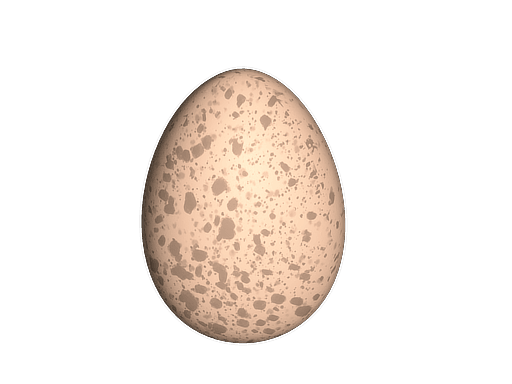
Players frequently notice that some Weekly Care Package eggs look mint green, pale blue, warm tan, or dark cocoa brown, while others have dense dark speckles or almost clean shells. In egg_pristine.vmdl and egg_basic.vmat, the egg model has no bone morphs, so the pet seed drives 7 material slots:
| Slot Index | VMAT Attribute | What It Controls on the Egg | Compiled Expression Range |
|---|---|---|---|
| Slot 1 | $egg_brightness | Overall shell lightness (creamy white vs dark brown) | 0.20 to 1.00 (clamped by hue roll) |
| Slot 2 | $egg_hue | Shell color shift (tan, olive, mint green, sky blue, teal) | -12.0° to +165.0° (quadratic curve u²) |
| Slot 3 | $egg_saturation | Intensity of the shell tint | 0.08 to 0.95 |
| Slot 4 | $egg_detail_speckle | How strongly the spotted speckle mask blends over the shell | 0.10 to 0.90 |
| Slot 5 | $detail_ushift | Horizontal UV shift of the speckle pattern across the shell | 0.00 to 1.00 |
| Slot 6 | $detail_vshift | Vertical UV shift of the speckle pattern across the shell | 0.00 to 1.00 |
| Slot 7 | $egg_detail_scale | Size of individual speckles (0.50 = large blotches, 1.50 = fine dots) | 0.50× to 1.50× |
Why some egg colors appear more often than others
Look closely at the compiled bytecode for g_fHueShift on the egg material: instead of lerping linearly with $egg_hue, Valve squares the random draw (u * u) between -12° and +165°. Because squaring a 0.0 to 1.0 random number clusters values near zero:
- Warm cream, tan, and brown shells (
-12°to+25°) appear on roughly 47% of all seeds. - Olive and sage green shells (
+25°to+85°) appear on roughly 28% of seeds. - Mint, cyan, and pastel blue shells (
+85°to+165°) require a high$egg_hueroll (u > 0.76) and appear on roughly 25% of seeds.
Real CS2 egg pattern seed examples
You can verify how specific seeds transform the shell in the CSDelta 3D Inspector:
| Pet Seed | Shell Hue Shift | Saturation | Brightness | Speckle Opacity | Speckle Scale | Visual Shell Look |
|---|---|---|---|---|---|---|
Seed 0 | 0.0° | 1.00 | 1.00 | 50% | 1.00× | Default authored warm speckled egg |
Seed 1337 | -3.5° | 0.93 | 0.99 | 41% | 1.34× | Rich golden-tan shell with fine speckles |
Seed 9999 | -12.0° | 0.76 | 0.31 | 19% | 0.58× | Deep chocolate-brown shell with subtle large spots |
Seed 42 | +84.1° | 0.32 | 1.00 | 89% | 1.27× | Pale sage-green shell with heavy freckling |
Seed 1 | +89.3° | 0.43 | 1.00 | 84% | 0.57× | Mint-green shell with bold jumbo blotches |
Seed 777 | +158.4° | 0.50 | 1.00 | 78% | 0.73× | Rare cool Robin's-egg cyan-blue shell with medium spots |
Does your egg pattern predict your chicken breed or color?
No. Your egg pattern only styles the shell while upgrade level = 0. Every egg hatches into the exact same yellow Pet Chick (upgrade level = 1, where the seed only shifts chick brightness 0.60 to 1.10 and hue -5° to +8°). Your adult breed (Catalana, Silkie, or Polish) and coat are rolled when the bird reaches the Pullet stage (upgrade level = 2).
How pet seeds change body shape: Pullet vs Hen morphs
Once your bird reaches Pullet and Hen, the pet seed drives procedural bone morphs stored inside each breed's .vmdl file. Each trait blends between a minimum (0%) and maximum (100%) skeletal pose across every animation:
| Body Trait | Bone Sequence Name | Pullet Range (Stage 2) | Adult Hen Range (Stage 3) | What Changes Visually |
|---|---|---|---|---|
| Fatness | chicken_hips | 0% to 50% | 0% to 100% | How round and wide the body and hips sit |
| Tail | chicken_tail_scale | 0% to 50% | 0% to 100% | Length and fan spread of the tail feathers |
| Legs | chicken_legs | 50% to 100% | 0% to 100% | Standing height (stilt-legged vs low-slung) |
| Wing Size | chicken_wing_size | 0% to 100% | 0% to 100% | Overall length of both wings |
| Wing Width | chicken_wing_width | 0% to 100% | 0% to 100% | How far the wings puff out from the ribs |
| Neck | chicken_neck | 0% to 100% | 0% to 100% | Neck extension and posture height |
| Head | chicken_head | 70% to 80% | 20% to 60% | Head proportion (juvenile pullets have oversized heads) |
| Comb | chicken_comb_front / back | 0% to 20% | 0% to 100% | Catalana only: red crest height (front and back roll independent 0.8× to 1.2× jitter) |
| Wattle | chicken_waddle | 0% to 20% | 0% to 100% | Length of the red chin flaps under the beak |
Notice how Valve engineered the Pullet vs Hen presets: a Pullet is locked to slim hips (0% to 50%), a short tail (0% to 50%), long gangly legs (50% to 100%), an oversized head (70% to 80%), and a tiny comb/wattle (0% to 20%). When it upgrades to a Hen, the full 0% to 100% adult sliders unlock and the head scales down to 20% to 60%.
On Catalana hens, the comb preset consumes three consecutive random floats: one for the base comb height (u), one for front-comb jitter (v), and one for back-comb jitter (w), applying u × (0.8 + 0.4 × jitter) so the front and back halves of the crest are asymmetric.
Which CS2 chicken colors change the most with the pet seed?
On some base coats (like Catalana White or Catalana Tan), the pet seed only nudges feather hue by a few degrees (-5° to +25°) and shifts face detail UV offsets. On other coats, the .vmat expression swings hue all the way around the 360-degree color wheel, meaning two birds with the exact same coat name can look like completely different colors.
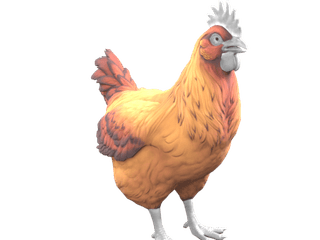
Catalana Dark Orange
Full 360° Hue Swing (-178° to +179°)
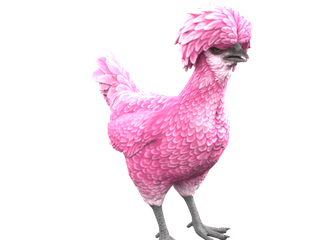
Polish Pink
Full 360° Hue Swing (-178° to +179°)
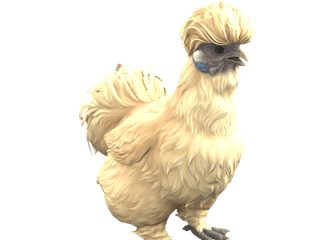
Silkie Leopard
360° Base & Spot Hue (-178° to +179°)
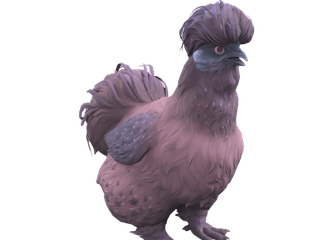
Silkie Purple
Iridescence 0.00 to 3.00 + Hue Shift
Complete seed-sensitivity table across all 3 breeds
Here is the exact shader variation extracted from pet-shade.json across the three adult breeds:
| Breed & Coat Variant | Base Hue Shift Range | Detail / Marking Hue Range | Feather Iridescence (iriStrength) | Seed Impact Summary |
|---|---|---|---|---|
| Catalana: Dark Orange | -178° to +179° | -16° to +16° | 0.00 | Full color-wheel chameleon (can roll crimson, gold, green, or violet) |
| Catalana: Yellow-Red Gradient | -178° to +179° | -16° to +16° | 0.00 | Full 360° gradient shift across body plumage |
| Catalana: Black White Head | -179° to +15° | -16° to +16° | 0.00 | Wide cool-to-warm shift on tinted regions |
| Catalana: Light Blue & Red | -179° to +13° | -26° to +16° | 0.00 | High seed variance across body and neck |
| Catalana: Blue & Light Orange | -16° to +180° | -16° to +16° | 0.75 (fixed) | Half-wheel hue swing with metallic feather sheen |
| Catalana: Black with Red Head | -49° to +120° | -16° to +16° | 0.00 | Head and hackle tint shifts from crimson to amber/green |
| Catalana: Yellow & Red | -16° to +90° | -16° to +16° | 0.92 (fixed) | Strong glossy iridescence with warm-to-lime shift |
| Catalana: Black / Grey | -16° to +16° | -16° to +16° | 0.00 to 1.00 | Seed controls how strongly the dark feathers shimmer in light |
| Polish: Pink | -178° to +179° | 0° | 0.00 | Full 360° solid-mask tint (rolls magenta, coral, lavender, or mint) |
| Polish: Black with White Head | -16° to +220° | -16° to +16° | 0.00 to 0.90 | Huge hue swing plus seed-rolled iridescent sheen |
| Polish: Green with Red Head | -14° to +140° | -180° to +179° | 0.00 to 0.90 | Body hue, head detail hue, and iridescence all roll independently |
| Polish: Green | -11° to +135° | 0° to +228° | 0.00 | Sage-to-teal base with wide secondary feather color shifts |
| Polish: Orange White & Blue | -10° to +25° | 0° to +237° | 1.00 (fixed) | Secondary markings swing across two-thirds of the color wheel |
| Polish: Blue | -25° to +18° | -25° to +197° | 0.00 to 0.90 | Face detail and iridescent sheen vary sharply by seed |
| Silkie: Leopard | -178° to +179° | -178° to +179° | 0.00 | Base fur and leopard rosettes both spin 360° independently |
| Silkie: Red | -178° to +179° | -90° to +269° | 0.00 | Full-wheel base and secondary fluff color combinations |
| Silkie: Orange | -20° to +199° | -20° to +199° | 1.00 (fixed) | Swings from fiery orange through gold, lime, and cyan |
| Silkie: Red Beetle | -8° to +190° | 0° | 1.50 (fixed) | High beetle-shell iridescence with 198° hue arc |
| Silkie: Aqua with Yellow | -40° to +40° | 0° to +359° | 2.00 (fixed) | Maximum fixed iridescence (2.0) with 360° detail color |
| Silkie: Purple | -38° to +58° | -38° to +58° | 0.00 to 2.99 | Highest possible seed-rolled iridescence ceiling (2.99) in CS2 |
Freeze-time ping tricks and the 13 trick animations
In the November 5, 2026 CS2 update, Valve added interactive freeze-time tricks: pinging your deployed pet chicken during round freeze time commands it to perform a trick from its animation graph. Additionally, when your in-game setting for customized item text is set to hidden, pet chicken names are now hidden cleanly alongside weapon nametags.
The game files ship 13 trick animations (chicken-anims.glb, indexed 0 through 12). Six of those tricks are named directly on the Photo Booth action buttons, while seven are unnamed bonus animations that can trigger in-game:
| Trick Slot (0-Indexed) | Photo Booth Name | Minimum Stage Required | Clip Duration | What the Chicken Does |
|---|---|---|---|---|
Trick 0 (#1) | Unnamed in files | Pullet (map deploy) | 2.6 s | Quick head-bob and wing flutter |
Trick 1 (#2) | Fly | Hen (Stage 3) | 3.3 s | Flaps upward into a short hover and lands |
Trick 2 (#3) | Sit | Chick (Any age) | 7.4 s | Tucks legs underneath and settles on the ground |
Trick 3 (#4) | Unnamed in files | Pullet (map deploy) | 7.4 s | Ground scratch and curious peck routine |
Trick 4 (#5) | Unnamed in files | Pullet (map deploy) | 2.5 s | Fast alert hop and tail shake |
Trick 5 (#6) | Dance | Pullet (Stage 2+) | 5.8 s | Slides side-to-side with rapid cycling feet |
Trick 6 (#7) | Unnamed in files | Pullet (map deploy) | 7.7 s | Strutting circle walk with neck bob |
Trick 7 (#8) | Unnamed in files | Pullet (map deploy) | 3.9 s | Double wing stretch and ruffle |
Trick 8 (#9) | Unnamed in files | Pullet (map deploy) | 2.6 s | Quick spin and bow |
Trick 9 (#10) | Wag | Pullet (Stage 2+) | 7.3 s | Wiggles tail feathers side-to-side |
Trick 10 (#11) | Unnamed in files | Pullet (map deploy) | 14.3 s | Extended strut, preen, and ground peck sequence |
Trick 11 (#12) | Jump | Pullet (Stage 2+) | 3.2 s | Vertical hop with wing tuck |
Trick 12 (#13) | Kick | Hen (Stage 3) | 3.8 s | Hop-kick forward with both feet |
You can preview all 13 trick animations, toggle the 10 Photo Booth hats and glasses (Helmet, Armor Helmet, Alien, Banana, Glasses, Nose Glasses, Party Hat, Sprout, Top Hat, and Wizard Hat), and scrub any pet seed in real time inside the CSDelta 3D Inspector.
Frequently asked questions
What is a pet seed in CS2?
A hidden 32-bit integer (attribute 313) attached to your pet item. It seeds Source 2's random stream to roll egg shell color and speckle placement on eggs, plus feather hue shifts, iridescence, and nine body-shape sliders on adult chickens.
Does a blue or green CS2 egg hatch into a rarer chicken?
No. Egg shell color and speckle patterns are driven by the egg material's seven shader slots ($egg_hue, $egg_saturation, $egg_brightness, and $egg_detail_speckle), whereas your adult breed and base coat come from the item's style ID when it reaches the pullet stage.
Which CS2 chicken coats have the biggest seed differences?
Catalana Dark Orange, Catalana Yellow-Red Gradient, Polish Pink, Polish Green with Red Head, Silkie Leopard, Silkie Red, and Silkie Orange all allow their primary or detail hue to rotate up to 360 degrees across seeds, while Silkie Purple can roll feather iridescence from 0.00 all the way to 2.99.
How do you make your CS2 pet chicken do tricks in a match?
Once your pet is at least a Pullet (upgrade level 2) and deployed with you, ping the chicken during round freeze time to trigger a trick animation.
Can you trade or sell rare pet seeds in CS2?
No. All CS2 pets, Chicken Eggs, and Chicken Feed bags are permanently account-bound (cannot trade) and cannot be sold on the Steam Community Market or external skin marketplaces. For tradable items where pattern seeds do create real market value, check out our CS2 Trade-Up Calculator, Float Sniper, and 3D Skin Inspector.